What is AI predictive maintenance? A plain English guide for plant managers.

AI predictive maintenance is the practice of putting sensors on industrial equipment, streaming their data into machine learning models, and using those models to forecast failures weeks before they happen, so maintenance teams can plan repairs during scheduled downtime instead of reacting to breakdowns.
How does AI predictive maintenance actually work?
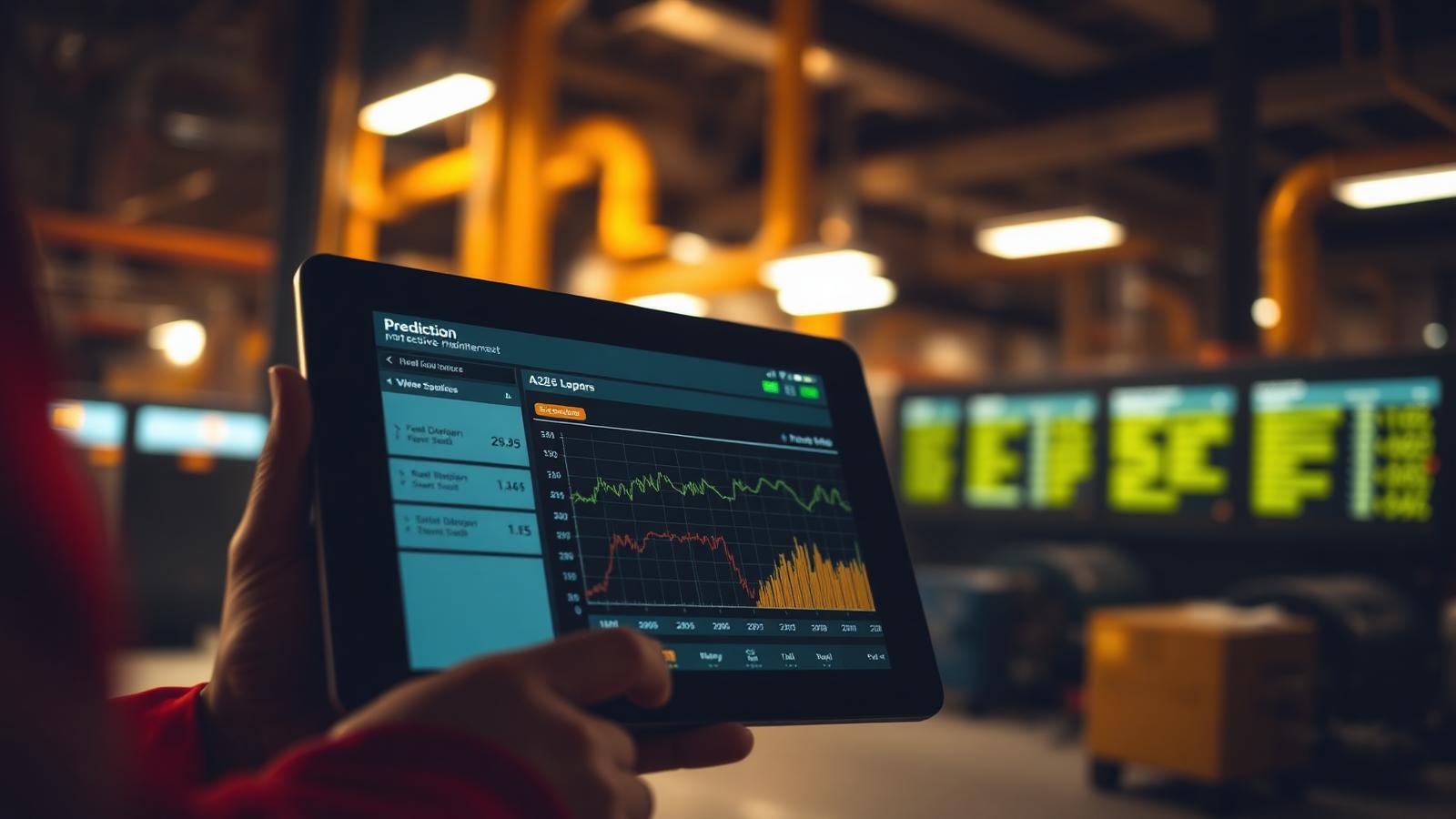
Every rotating asset has a healthy signature, a specific pattern of vibration, temperature, current draw and acoustic energy that it produces when everything is fine. AI predictive maintenance systems learn that baseline, then watch 24/7 for the earliest micro-deviations that signal a developing fault.
- Sense, wireless sensors capture vibration, temperature, current, pressure and acoustic data from critical assets.
- Baseline, the AI ingests weeks of readings to learn each machine's healthy fingerprint under real operating conditions.
- Detect, anomaly detection models flag deviations from baseline in near real time, ignoring benign process changes.
- Predict, failure mode classifiers translate the anomaly into a named fault (bearing wear, misalignment, cavitation) with an estimated Remaining Useful Life.
What failure modes can AI actually detect?
| Failure mode | Primary sensor | Warning window |
|---|---|---|
| Bearing wear (outer/inner race) | Vibration + acoustic | 6 12 weeks |
| Shaft misalignment | Vibration | 3 8 weeks |
| Impeller cavitation | Vibration + pressure | 2 6 weeks |
| Electrical stator faults | Current signature | 4 10 weeks |
| Belt wear / looseness | Vibration | 2 4 weeks |
| Gear tooth defects | Vibration + acoustic | 4 8 weeks |
| Overheating (lube starvation) | Temperature | days 2 weeks |
What AI predictive maintenance can't do (honest limits)
- Predict random catastrophic failures (a foreign object strike, a lightning event) that leave no gradual signature.
- Diagnose assets it has never seen enough healthy data for, most models need 2 6 weeks of baseline to be trustworthy.
- Replace a skilled maintenance planner. It tells you what and when; a human still schedules the fix.
- Fix bad data. Loose sensor mounts, missing tags, and sparse readings will produce noisy alerts.
Glossary: 10 terms plant managers should know
- RUL, Remaining Useful Life. The model's estimate of how long an asset can run before failure.
- FFT, Fast Fourier Transform. Converts a vibration waveform into the frequencies present, exposing bearing signatures.
- Anomaly detection, an ML approach that flags any behaviour outside a learned normal pattern.
- Baseline, the healthy operating fingerprint the model compares live data against.
- P F interval, time between a Potential failure signal and Functional failure. Predictive maintenance widens this.
- CMMS, Computerized Maintenance Management System. Where work orders live (Fiix, UpKeep, Maximo).
- MTBF, Mean Time Between Failures. A common reliability KPI.
- Condition monitoring, the broader parent category; predictive maintenance is condition monitoring plus prediction.
- Edge gateway, the small on site device that aggregates sensor data before uploading.
- Digital twin, a live software model of a physical asset kept in sync via sensor data.
"For every $1 spent on predictive maintenance, US manufacturers save an average of $5 in avoided downtime and repair costs."
, US Department of Energy, O&M Best Practices Guide
Common questions
Is AI predictive maintenance the same as condition monitoring?+
No. Condition monitoring measures asset health in real time. AI predictive maintenance adds machine learning models on top that forecast when a fault will progress to failure and translate that into a work order.
How long before AI predictive maintenance shows results?+
Most plants see their first real alert within 6 10 weeks, the time needed to build a healthy baseline. Meaningful ROI typically shows up in the second quarter of operation.
Do I need to replace my existing equipment?+
No. Modern wireless sensors retrofit onto existing motors, pumps, compressors and gearboxes without any modification to the asset itself.
What's the difference between AI predictive maintenance and preventive maintenance?+
Preventive maintenance runs on a fixed calendar (every 90 days, every 500 hours). Predictive maintenance triggers only when the AI detects a real degradation, avoiding both over servicing and missed failures.
Can predictive maintenance work on old equipment?+
Yes, sensors are asset agnostic. In fact, older assets often see the biggest gains because they fail more often and have more variable baselines that AI can learn.
Ready to see this on your plant?
A plant assessment takes one site walk. You get a prioritized list of your highest risk assets and a downtime cost model, free.
Book a Plant Assessment